I’ve stopped posting sermons that I preach regularly to my blog, for various reasons, but I was scheduled to preach today at our diocesan staff Eucharist – on the texts for this coming Sunday, the fourth Sunday after Epiphany. The homily I ended up writing and preaching felt personal enough and relevant enough to this moment that I decided it is worth sharing here. I hope it speaks a word to you, dear Reader.
Micah 6:1-8
Psalm 15
1 Corinthians 1:18-31
Matthew 5:1-12
In the name of the Father and of the Son and of the Holy Spirit. Amen.
Let me start with some raw honesty: this is not your regular homily. I’m not at a church this Sunday, so I don’t need a sermon that is preachable to your run-of-the-mill congregation. In fact, with so many things on my plate, I was tempted to re-preach an old sermon today. I decided not to for one main reason: in my nearly fifteen years of parochial ministry, I never once preached on the fourth Sunday of Epiphany in year A. Go figure.
So I was forced to grapple with these scripture texts and come up with something to say about them. And, as I sat at my computer, I found myself thinking of all of you. Because, again, I’m not in a church this Sunday. You all, my colleagues and friends, are the only congregation I will ever preach this sermon to. And I can afford to keep going as I have started – with some raw honesty.
I am struggling with these scriptures today. Don’t get me wrong: I love me some sermon on the mount. And that brilliant final verse from Micah that has been made into a liberal meme all over social media. And Paul in first Corinthians (which we didn’t hear today but you’ll hear on Sunday): “For Jews demand signs and Greeks desire wisdom, but we proclaim Christ crucified… For God’s foolishness is wiser than human wisdom, and God’s weakness is stronger than human strength.”
The readings this week are filled with some of the most beautiful and profound poetry of our faith, verses that I have repeated and taken comfort in many times in the past.
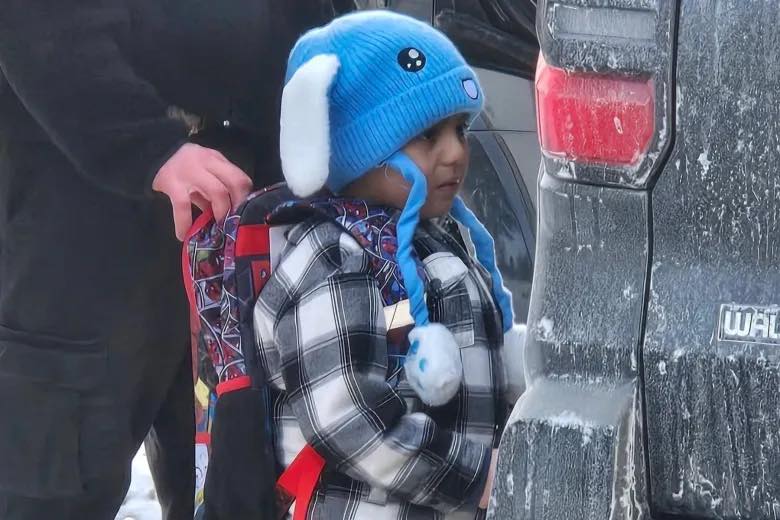
But goodness do these verses hit differently in these terrible times. It is with physical nausea that I read “blessed are the peacemakers” and see headlines about the Nobel peace prize, Greenland and Venezuela. It is with fury that I read “blessed are those who mourn” and hear about the insanity of plans for Gaza while Palestinian babies die from hypothermia and their parents are murdered by IDF bullets. It is with an anguished soul that I read “what does the Lord require of you but to do justice, and to love kindness, and to walk humbly with your God” with that image of 5-year-old Liam Ramos seared into my brain.
Usually, these texts provide us with comfort and hope in difficult times, and in part they still do. But I have to admit to some serious anger as I read the Beatitudes today. Here are a few of them again:
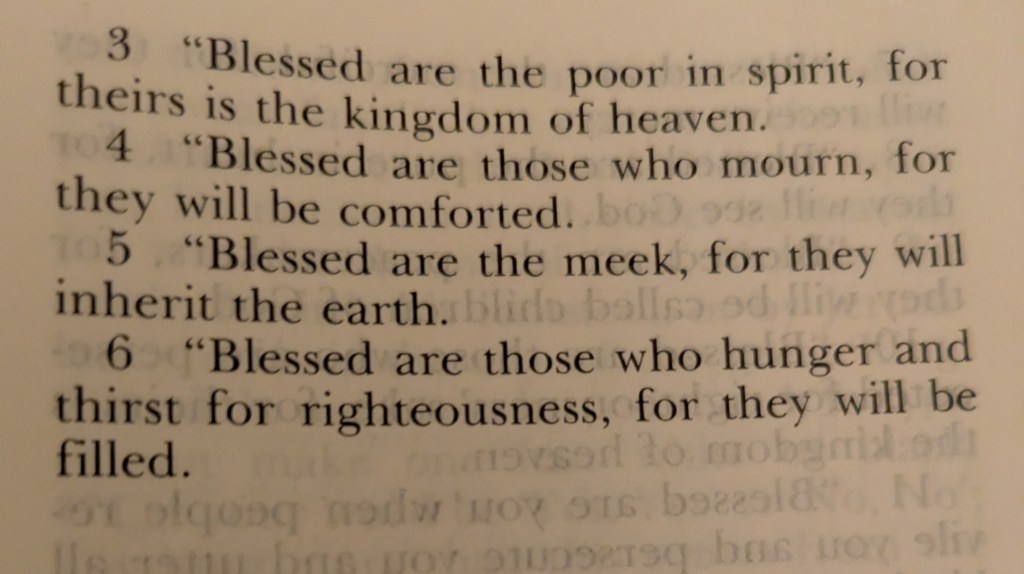
“Blessed are those who mourn, for they will be comforted.
Blessed are the meek, for they will inherit the earth.
Blessed are those who hunger and thirst for righteousness, for they will be filled.”
Do you hear that? All the repetition of that future-tense? That “will.” Those of us who mourn, who hunger for righteousness, who prize mercy and make peace, those of us who are trying our darndest to follow the Way of Christ Jesus – we will one day see God’s kingdom.
Great. Fantastic. But, today, I want to stand up in the crowd at Jesus’ feet on that Galilean hill and yell across to him: “But what about now???” What about right now? We can believe in the future comfort. We can trust that God’s goodness will win out. We can know in our very bones that God’s light will not, in the end, be overcome.
But in the meantime, in the right now, it sure as hell is dark. And what good is that “will” of the beatitudes to the many of us suffering right now? What good is it right now to Palestinians or Ukrainians or the Sudanese? What good is it right now to Alex Pretti’s parents, to Renee Good’s widow and children, to Liam Ramos’ family? What good is it right now to all of us who have to keep showing up – to work, to our congregations, to our families – our parents and our spouses and our children and grandchildren – What good is that future tense to us right now who have to muddle forward while the world is on absolute fire?
Today, I read the Beatitudes and I want to scream at Jesus from my spot at the back of the crowd: “What good is all of that to us right now?”
I am on a running text thread with my dearest friends who make up the leadership team of PACA – Palestinian Anglicans and Clergy Allies. There are times when my phone blows up because of the string of texts being sent back and forth among us. It happens so often that if Ben’s around and hears the constant dinging of my phone, he’ll say “I guess the PACA girls are texting again!”
Well, the PACA girls were at it last Friday morning as I was thinking about these scriptures. What kicked it off this time was the administration’s announcement about its plans for Gaza but the chain quickly became about all. the. things. and our collective anxiety and anger.
At one point, I told my friends: “I honestly don’t know how this ends. ICE. Israel. Greenland. Epstein. How does it end? I want to skip ahead to the end of the book please. Even if everyone dies. At least I’ll know where we’re headed.”
I wonder if any of you do that, too. I rarely do. But every now and then, if the novel I’m reading is really intense and the pleasure I get from immersing myself in a good story is overcome by the anxiety I feel getting through the build-up, I will flip to the last few pages and find out what happens. Even if it ends in tragedy, at least I know. And then I can go back and with a calmer heart and mind appreciate the story, the getting-there.
Honestly? I’m ok with my anger at God right now. I think it’s an appropriate response when I read the promises God makes to us in the scriptures alongside the horrific reality around us. For all we know, maybe someone did stand up in that Galilean crowd and yell across to Jesus from a place of their own understandable anxiety and anger. And if they did, I bet Jesus would have responded with the same kind of compassion he always shows to the suffering.
I bet he would have just looked at that person and nodded. I bet he would have heard all the anguish and met it with empathy. And maybe he would have repeated those beatitudes all over again: “Blessed are those who mourn, for they will be comforted… Blessed are those who hunger and thirst for righteousness, for they will be filled… Blessed are the pure in heart, for they will see God.”
This is how the book ends, says Jesus. The light shines in the darkness and the darkness cannot and does not overcome it. All of it. All the sorrow. All the suffering. All the injustice. All the horror. They all pass away. Only God’s love gets the final word. This is no tragedy. It all ends well.
And that doesn’t make the meantime any easier. It doesn’t make the whole mess of it go away right now. So, it’s ok to be angry about that. But as we muddle along in it, we can trust that God’s promises are fulfilled and by God’s grace, we are given enough hope to keep going, to keep showing up. By God’s grace, knowing how it all ends gives us enough courage and enough hope to do justice, to love kindness and to walk humbly with our God, for right now. Amen.

 The Thankful Priest - Leyla King
Leave a comment