A note to my readers:
Some time ago, I published a blogpost in which I referred to myself as “sort of” white. I got an inordinate amount of feedback, both positive and negative, some just curious, some weirdly aggressive, about my use of “sort of” in that context. In an attempt to unpack that phrase, I am sharing my experiences of being “white-ish” in what I expect will be a good number of blogposts, including this one, over the months (years?) ahead.
“But I would never put white [on a form]. I would always put ‘other’ and fill in ‘Middle Eastern.’ Because I never considered myself white. Yeah, we have light skin sometimes and white features or whatever. I mean, I don’t know… I just know we’re not white. It’s something I’ve always felt.”
– 18-year-old Iranian-American Feri as quoted by Neda Maghbouleh in The Limits of Whiteness
The first time I became self-aware of my identity as a Palestinian was as a young teen. But it was many years later that the actual color of my skin created any kind of dissonance between my self-understanding and my experience of others.
In my last semester of college, I interviewed at an elite prep school for one of their teaching internship positions in English Literature. The interview was one of those day-long affairs where you meet about a dozen different people from students to administrators to faculty members. The interviews all went well with one exception. Early in the afternoon, I was scheduled to meet with the “Dean of Diversity” or something like that. I don’t remember the title he held exactly; I do know it was the first time I had ever even heard of such a role and I didn’t really know what to expect.
The dean turned out to be a black man and when I entered his office, he invited me to take a seat in one of the two chairs in front of his large desk. He went around and sat down on the other side in his swivel-seat such that the desk came between us. He was the only person I interviewed with that day who chose such unfriendly positioning. We exchanged pleasantries and he asked one or two basic questions about my resume and experience. And then, suddenly, the tone shifted; he looked piercingly at me over the chasm of his desk and asked: “What’s the one thing you would never want to do to a student in your classroom?”
I was somewhat flabbergasted. It was immediately clear to me that this was a question to which he already had a set answer and I was to attempt to guess it. But I had no clue what he wanted me to say. Honestly, the first thing that came to mind was “hit a student”? but that seemed like too obvious an answer so I discarded it. I came up with something else instead (though I don’t now remember what) but my answer was not the right one.
“No,” the dean responded crisply. “You never want to assume a student is dumb because he is black.”
“Um, ok, yeah,” I said weakly. “That’s true.”
The dean went on to expound to me with considerable pride the work that he was doing throughout the school to promote the interests of black and brown students (though that terminology was not really used then). And the more he spoke, the more I realized that he was making certain assumptions about me based on the color of my skin. He ended his monologue by saying, “Here, we celebrate African-American month and Latino-American week. We even have a Jewish-American Day.”
And when he paused momentarily for breath, I interjected: “I think that’s all really great, but I’m wondering, what do you do for your Arab-American students?”
Now he was caught off-guard. He looked at me, puzzled. “I’m sorry?” he asked.
“Your Arab-American students. What do you do to promote their interests?”
“Oh. Well… uh… we give our Muslim students days off from class when it’s their religious holidays.”
“Well, that’s good,” I told him. “But I’m not asking about Muslim students. As an Arab-American Christian myself, I’m curious about your Arab-American students.”
The poor dean floundered a bit and a minute or so later I was ushered out of his office rather quickly.
***
Despite the awkward interview with the Dean of Diversity, I was offered the one-year intern position at the school. So, a few months later, I packed up my college life, bought a car (with a little help – thanks Mom and Dad!) and drove to my new digs in a small apartment within one of the dormitories of the boarding school.
To give credit to the Dean of Diversity, almost as soon as I moved in, he reached out to welcome me to campus. “I’d like to invite you to the first gathering of the year of our Faculty of Color next week,” he told me.
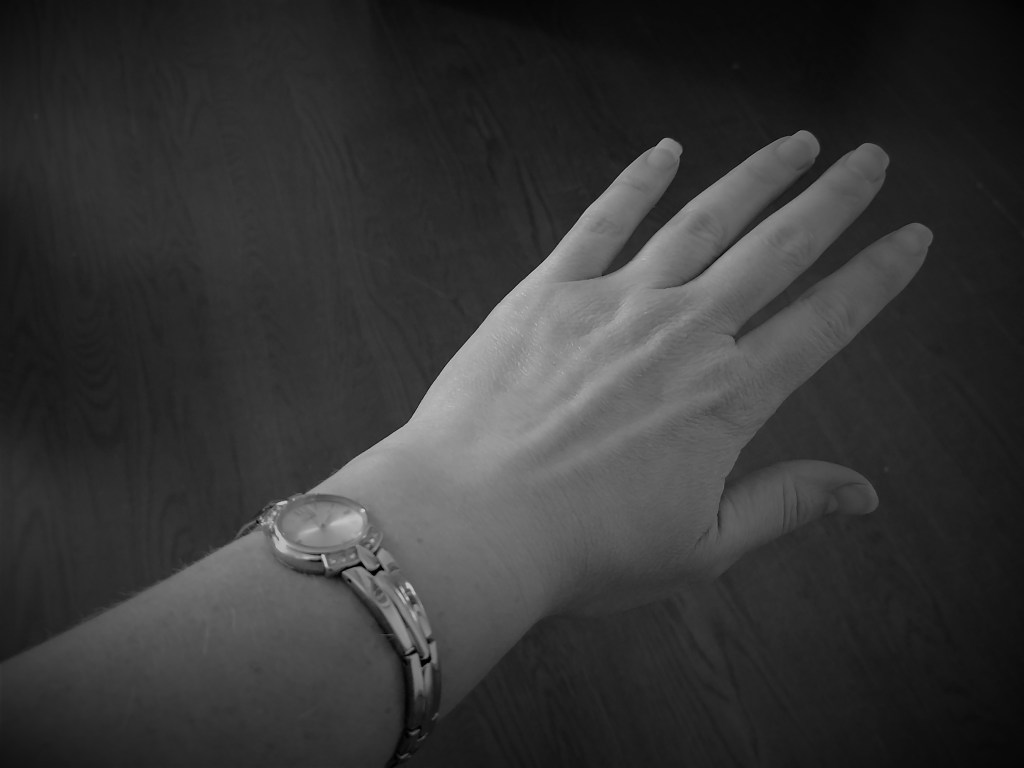
It was the fall of 2002 and until this moment, I had never even heard the term “person/people of color.” It was my very first encounter with the phrase. I felt deeply uncertain. I remember looking at the back of my own hand and my forearm and thinking, No one in their right mind would call this skin “of color.” The color of the skin I was looking at could only ever be called white. How could I be part of this guy’s “Faculty of Color”? But, I was also brand new, young and eager to meet my new colleagues so I accepted the Dean’s invitation.
The night of the gathering – it was drinks and light hors d’oeuvres – I walked to the house of the faculty member who had volunteered to host. Both because of my nerves and because I am genetically engineered to be incapable of being anything but early to everything, I arrived a few minutes before the actual start of the party. I sort of dawdled around the front door and then, when there was no longer any other option, rang the doorbell.
The host opened the door to me and ushered me in and the Dean of Diversity was by his side to welcome me. Introductions were made and then, as the two of them continued their preparations, I wandered into the main living area where the buffet was set up. Amazingly, it turned out I wasn’t the only early bird. Another woman was already there, admiring a picture on the wall. Innately shy, I didn’t approach her but just browsed the food on offer, feeling awkward. So far, I was the only white-skinned person around.
A moment later, the doorbell rang again. The next guest, a black man, greeted the host and the Dean who had stationed themselves by the door and then walked into the main room. The newcomer took one look at me and exclaimed incredulously, “What are you doing here?”
I fully expected the dark wood floor beneath my feet and the earth and rock below that to open wide and swallow me whole. I felt the heat rising immediately to my cheeks and the thought of how red I must look in that moment embarrassed me even further. I felt nauseous and held on to my wine glass with two hands for fear that it would show how badly I was shaking. I opened my mouth to answer but no words came out. What was I doing here? I clearly didn’t belong among the “Faculty of Color.” I was an interloper, a misfit, an offense to the other guests.
All of that ran through my mind and body in the five or so seconds during which the other guest, the woman who had been looking at the painting, the woman who was located immediately behind my right shoulder, turned around and said, “Oh hi Richard! So good to see you! I came back from my sabbatical a little early and thought I’d come see everyone here!”
The man, Richard, hadn’t been talking to me at all. As he and the woman embraced each other and began catching up, I took a few deep breaths and tried to calm myself enough to at least do something, anything other than stand there dumb. Finally, I began to be more certain that my legs were still in existence, that the floor beneath me was solid and that I could, indeed, move without falling. I found a flat surface to put my wine glass down, walked past the couple still chatting to one another (“Oh I saw some really wonderful things on my travels! I can’t wait to tell you about it all; it’s so good to be back here and seeing you…”), and without even saying goodbye, left that place. My year at the prep school was wonderful and formational but I don’t think I ever spoke to the Dean of Diversity again.
***
Over the years since then, I have reflected often on my very short experience at that party. The discomfort I felt in that moment was worse than anything I had ever known. The feeling of being out of place, so obviously different, was deeply disorienting. And I’ve often wondered if folks who exist as minorities in the world more usually just live with that sense of their difference all the time. What must that be like? Or does that recognition of one’s own physical difference not really register anymore? Does it only arise when they are “tokenized” in any given context? I don’t know the answers to these questions and I can only assume that’s part of the privilege I carry as a white-looking person.
At the same time, though, my whiteness cloaks and often overshadows my own identity in equally discomforting ways. About a year before my experience at the prep school, I was in the middle of a training for student-staff of the residence hall of my college when planes crashed into the twin towers of the World Trade Center. When the second plane hit and it was clear that this was not some sort of freak accident, the small group of students and our adult support person gathered around one of the large-screen TVs in the common room. The custodial staff members of the dorm were already there, seated on the big sofas. These were women whom I knew pretty well. I lived in the same dormitory all four years of college and had often engaged these women in conversation. I knew bits and pieces of their lives. I knew their names and they knew mine. I liked them. I believe they liked me.
As we all watched in shock as the smoke and fire billowed out from the structures, as human beings jumped to their deaths from the highest floors, one of the custodians loudly proclaimed, “I bet it was those damn Palestinians who did this.”
In the face of the horror happening on the screen before me, the woman’s comment was such a small shock. And yet it was a shock that registered with me nonetheless. I said nothing, of course. What could I say? If my skin had been darker, like my sister’s, if I spoke with a slight – but perceptible – accent, like my mother, would the custodian still have said what she did in my hearing? Maybe. Perhaps, had my difference been more obvious all along, she and I would never have become so friendly to begin with… I don’t know.
I felt like a white interloper at that Faculty of Color gathering; it is also true that even more often I feel like an Arab interloper in most of the situations I encounter in my personal and professional life. How many times have folks assumed I am, plainly, white? How many times have I had to decide if and when to reveal my “coloredness,” the “-ish” of my whiteness? As many times as I have had to make that decision, it never feels any less weird, any less bizarre. To (pro-)claim my “color” over and against the whiteness of my skin makes me feel proud, vulnerable, strong and disoriented all at the same time. I have not yet learned how to do it well. I’m not sure I ever will.

 The Thankful Priest - Leyla King
Leave a comment