A note to my readers:
What follows is a description of what the past nine months have felt like to me. Others may have a different perspective of the particular event and its consequences that led to my experience. But that is their story, not mine. This is my story; this is my own experience of a lived reality.
And a content warning:
This post deals with issues of trauma, mental illness (PTSD), sexism and racism and contains a description of an imagined stabbing.
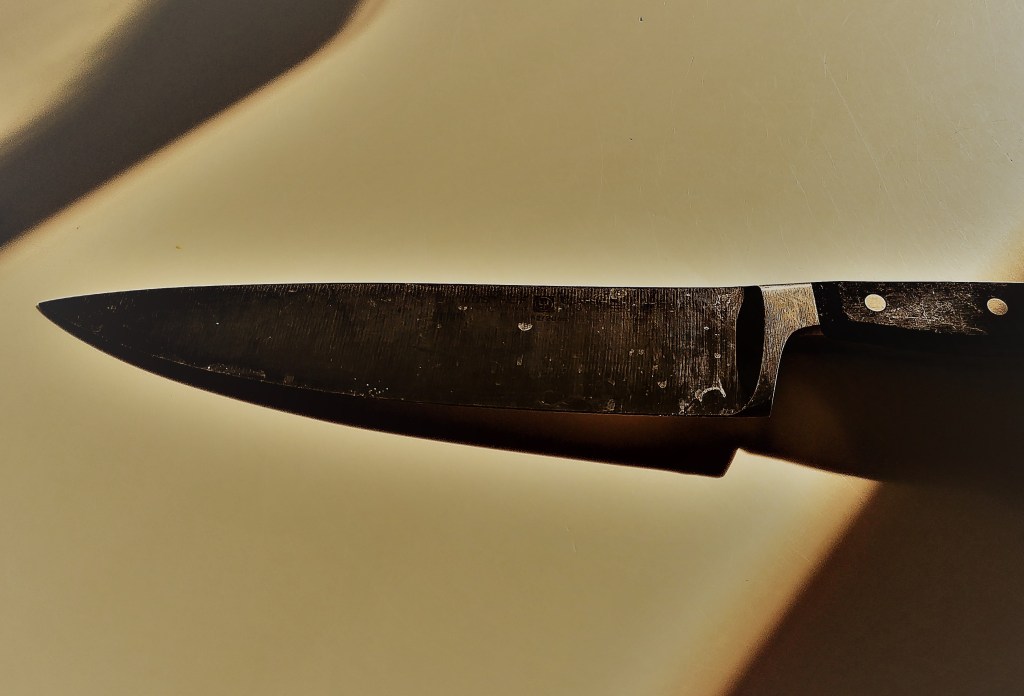
Imagine for a moment that you have been stabbed. It’s not fatal, but immediately, you know that it’s a significant injury, that it’s going to take a long time – and probably a lot of rehab – to heal, and that it’s most certainly very, very painful. You’re pretty sure the guy who stabbed you added a little twist to the knife at the end. And you know the guy who stabbed you. I mean, he’s not quite a close personal friend, but he’s a known entity; he’s not someone you had been expecting to up and stab you, so it took you by surprise and you’re shocked by it.
So you go up to your stabber (for the sake of ease, we’ll call him Person X) and you sort of get into his face and you are not quite yelling, but you’re close to it, and you say, “What the ?!?! Dude, you can’t go around stabbing people like this. You’ve hurt me! Badly. Don’t knife people anymore and don’t you dare ever stab me again and you should face the consequences of your actions.”
And – if you think being stabbed by X was shocking, get this – X responds, “What are you talking about?! I didn’t stab you. How dare you accuse me of stabbing you. What’s wrong with you? Why are you getting up in my face like this? You are seriously out of line for even suggesting that I would have stabbed you. How dare you!”
So you say, “Of course you stabbed me! I was right here; you just came up to me and stabbed me. I saw you. You know you did. Look: here’s the knife still in my side. Look: there’s my blood all over your hand; I think I even see a speck or two on your seersucker suit right there. Surely you’re not going to deny that you stabbed me. At least apologize for goodness’ sakes.”
And X says – and now he’s yelling – “Apologize?! Why would I apologize? For what?!?! I haven’t done anything. YOU should be the one to apologize. How dare you accuse me of stabbing you. How dare you ask me to apologize. I don’t see any blood. I don’t see any knife. I don’t see any wound. I don’t know what you’re talking about.”
At this point, you realize that X is crazy.
Because, clearly, there is your blood on his hands; there is the knife still sticking out of your side; there is the pain you’re feeling quite acutely at this point; plus, you know, you saw him stab you. So his denial is just plain ridiculous and you think, Well, I can’t do anything about crazy. So you walk away, shaking your head in a kind of infuriated disbelief.
And then you look down and you see that knife still sticking out of you and you think, I recognize that knife. I know whose knife that is. The knife belongs to a guy (we’ll call him Person Y) who is just not very careful with his knives. He has a few of them and he’s never used them on someone and probably never would, but he often leaves them lying around in places. They’re not locked up. He doesn’t keep good track of them, so it’s pretty easy for someone like Person X to take one without Y even knowing. And, seeing as Y’s knife has just been used to stab you, you decide to have a little talk with Y.
So, you go find Y and you tell him, “Look, I know you didn’t stab me. This wound I have is not really your fault. YOU didn’t stab me; X did. But this isyour knife and you have gotto start being more careful about the knives you own so that others don’t take them without your knowledge and go around stabbing people.”
And Y looks at you with great big saucer eyes and you think, Well, at least he’s going to respond better that X did. But the words out of his mouth are not exactly what you’d expect: “Oh, you found my knife!” he says. And he pulls it out of your side as he’s speaking and you wince a little but he doesn’t seem to notice.
So you repeat yourself: “Yeah, it’s your knife. Please can you keep better track of it in the future so that something like this doesn’t happen again.”
And Y says, “Something like what?”
And you say, not quite restraining the tone of exasperation, “Like me getting stabbed with your knife!”
And Y says, “I didn’t stab you.”
And you say (having completely given up on restraining your tone), “I know you didn’t stab me. X stabbed me. With. your. knife.”
And Y says, “No, it wasn’t my knife. I keep really good track of my knives.”
And you say, “No you don’t keep good track of your knives. And clearly it was your knife. You just pulled it out of my side, remember? Just a moment ago? Look: it’s still there in your hand, covered in my blood. And look: here’s the big, gaping wound that is still bleeding and that, by the way, hurts like hell right now.”
And as he surreptitiously wipes the blood from his knife onto his jeans he says, “No. No. It wasn’t my knife. I don’t know what happened to you. Whatever it was that may have happened to you, it doesn’t have anything to do with me. It’s really terrible to hear that you think it has anything to do with me. It doesn’t.” (He doesn’t say anything about your still-bleeding wound.)
And once again you’ve hit an impasse because Y is either blind or is pretending not to see and there’s just nothing you can do about that. And you think, What is wrong with these people?
And you go to the ones who love you best, the four or five folks who care about you most, and you show them your wound. And it turns out that they saw the whole thing happen. And they have been so worried about you all along and they say, “Oh my goodness! We can’t believe X stabbed you. Are you OK? We’re going to take you to a doctor. Let’s get that wound seen to. You must be so angry. That X is such a complete goon. What can we do to help you heal?” And you think, Thank God someone understands. And you tell them what else has happened, how X and Y have denied the whole thing. And they’re as shocked as you are and at a loss as to what to do next.
But then you remember the witnesses. You remember that when X stabbed you, there were dozens of witnesses around who all watched it happen. And you think, I’m standing here with this awful injury so I know this happened to me; my friends know it, too. X and Y are clearly crazy. And something must be done about it all. I’ll go talk to all those witnesses and they’ll help me rectify the situation.
And you tell your friends your plan. And they say, “Yes. That’s a good thing to do. Let us know how we can help.” So, with the confidence of their support, you head off.
You start with the ones you know who were closest to the action when it happened, the ones who had a front-row seat, so to speak, to the stabbing and who are your friends and colleagues, because you figure they’re most likely to help.
You approach the first one and say, “I saw you watch X stab me a little while ago. Can you believe it?! And he’s refusing to even acknowledge it now! What can we do about that, do you think?” And this first witness, this would-be friend, looks at you a moment with sad eyes and just turns around and ignores you. So you walk around her and so that you’re facing her again and say, “Didn’t you hear me? Look at this wound! You saw X stab me. What can we do?” And she just turns around again. So you walk around and try a third time. And for a third time, she ignores you and says nothing and turns again. And you stand there, mouth open, in disbelief and hurt. And you think, Wow. I was not expecting that. And, in grief, you walk away.
And you go to the next witness, a guy you know saw the whole thing because he was standing right next to X when X stabbed you. And you know this witness, too, and you think he’s a decent guy so you figure, Well, he’ll at least back me up. But when you talk to him he says, “No, I didn’t see X stab you. I don’t know what you’re talking about. You can’t say I saw X stab you. Have you even been stabbed?” So you remind him that he was standing right there when it all happened; you describe everything that took place just as you both watched it happen; you show him your still-bleeding wound. “No, I don’t see anything there,” he says as he stares directly at the gaping flesh in your side. “Are you even sure you got hurt? Besides, I don’t think X is the type to go around stabbing people. I don’t believe he stabbed you. I never saw anything like it.”
Now you’re beginning to doubt your own sanity, but you’ve got this painful wound and you’ve got your few friends who keep affirming that yes, this did happen. So you’re confused and you’re angry and you’re maybe a little bit naïve because you think, Well obviously this happened to me. I’ve got the wound to prove it. I’m still feeling the pain. X stabbed me and a bunch of people watched him do it. So the first two I talked to have bizarrely denied it: the others will remember. The others will support me and stand with me.
So you go to the next witness. And the next. And the next. And the one after that. Some of them are your friends; some are just acquaintances; some don’t know you at all but, you figure, what the heck – they saw it happen – I’ll ask them to just be honest about what they saw. Sometimes you speak to them in groups of two or three. Most of them you meet one by one. And with each meeting your frustration and anger and shock and grief deepen and widen until these emotions consume you. Because almost none of them will confirm the reality of what you all saw, what you all know to be true: that X stabbed you with Y’s knife, that you are still bleeding and in pain, that something must be done about it all. And some of them – enough of them that it even adds to your shock – do more than just turn away or lie or deny. Some of them say things so hurtful and confusing that it takes your breath away:
- “Don’t go around saying X stabbed you. People will hear you. It’ll damage X’s reputation. It’ll reflect badly on everything X is involved in. You don’t want that to happen, do you?”
- “I can’t believe you’re telling people that X stabbed you. That’s not something you should be talking about. No one wants to hear about that kind of violence. You really shouldn’t talk about it anymore; it just reflects poorly on you.”
- “I heard you say that you were stabbed with Y’s knife. Please don’t go around saying that. I’m worried it’ll make Y look bad if you keep telling people that. That’s really not fair to Y… Oh, and please don’t show me your wound. I prefer not to look at gross stuff like that.”
- “Yeah, I saw X stab you, but whatever. It’s not like it’s that big of a deal. He stabs lots of people. They don’t say anything about it. Why are you even still talking about it? And I can’t believe you’re still bleeding! Ugh. I think your blood has gotten on me! Please just keep your distance from me from now on.”
- “You must be quiet. You must stop talking about X stabbing you, whether he did or not. It doesn’t really matter. It’s not seemly or appropriate to talk about such things.”
- “I don’t know what happened to you, and I don’t really care. All I know is, you must stop mentioning Y’s knife. Don’t tell anyone about Y and his knife. I mean, Ihave lots of knives, too. Imagine if someone went around telling folks that my knife was used to stab them! I wouldn’t want that, whether it was true or not. That would make me look bad.”
- “Oh. That wound in your side looks really terrible. You should have that seen to. But, I don’t think you should go around telling people how you got it. I don’t think you should talk about X or about Y. It’s really painful to X and Y when you say those things. It really hurts their feelings.”
By the end of it, you don’t know what to think or feel anymore. All you know is that you are exhausted and overwhelmed.
There have been a very few people who have responded as you would have expected. One or two, maybe – people you hadn’t even met before – who witnessed it all and when you approach them, they say, “Yes. That’s what happened. X stabbed you with Y’s knife and you were gravely injured. I’m so sorry that happened to you. What can I do to help?” These people – who are just telling the truth – these rare, rare people seem like heroes to you because they stand as oases of honesty in the vast wilderness of denial that otherwise surrounds you. You are beyond grateful for and to them.
But you are still (barely) standing in the Denial Wilderness, still bleeding, still in significant pain, still healing from the physical wound, and wondering what has happened to you. Are you going crazy? Has everyone else gone crazy? Why won’t people be honest and transparent? Why don’t people just tell the truth? What do you do with the anger, the pain, the frustration, the grief, the shock – how do you move forward with all of it – if most of the people around you refuse to even acknowledge the fact that you have been stabbed?
A few months ago, a therapist whom I trust deeply and who knows me well looked me in the eye (through my computer screen because, you know, covid) and said, “Leyla, I think you’re suffering from Post-Traumatic Stress Disorder.” Immediately, I had two opposing thoughts simultaneously:
- That can’t be true.
- I know that must be true.
I knew it was true because it put a name on what I had been feeling for many months. And when someone names the reality of your experience, you know it in the very marrow of your bones, in the deep recesses of your heart. And I knew it was true because I knew that, for weeks and weeks, I had been living like a woman possessed. Like those people you read about in the gospels whose bodies and minds have been taken over by some other and it takes a divine miracle to relieve them. I was living as one controlled by my thoughts and emotions. My fury and frustration, my grief – and even my gratitude at times – were bigger than my body could hold. Instead, they had taken hold of me and I was powerless to overcome them, powerless to set them aside. When the therapist said those words, when she described the symptoms of PTSD, it was like she had seen the inside of my brain, like she knew what I had been experiencing all along. And I thought, Yes. I know that must be true.
And I also thought, But that can’t be true, can it?
All of this had been caused by one simple event: I was rejected for a job because of my gender (sexism), my ethnic background (racism) and my lack of “connections” (elitism). I was denied a position because of widespread, implicit and explicit, individual and systemic injustice. And that hurts. That’s painful. But traumatic? Traumatic enough to cause a real, diagnosable mental illness? I thought, That can’t be the case, can it? But there it was. If there were a test for PTSD as there is for Covid, a nose-swab or a saliva-sample, I’m convinced (as are the professionals who know me) that it would come back positive for PTSD. But why? How?
Throughout the past few weeks, I’ve gone over and over it in my head. And I’ve come to realize that the initial wound, the encounter with injustice in such a personal way, while deeply painful, wasn’t ultimately the cause of the real trauma. It was hard; perhaps it was momentarily traumatic as I recovered from the shock of it and realized what had happened to me. But, I think, in the long run, I would have bounced back with relative ease. The wound would have healed, slowly, perhaps, but cleanly. I would have been able to move on.
No, the trauma came at the hands of those who continually and consistently denied that it ever happened. The trauma was inflicted when people I knew, people I trusted refused to acknowledge my pain, ignored the injustice, told me I was the victimizer instead of the victimized, tried to make me silent. These were the folks who traumatized me, over and over, again and again. This is where the poison was. This is what has made it so very hard to heal.
The good news is that the body and the mind are marvelously made. With the help of loving family and friends, a couple of very good therapists, nice weather and a bike that is getting a lot of mileage, and a somewhat miraculous meditation practice, I think I’m on the road to recovering from PTSD. It might not be as instantaneous as it was for the folks who encountered Jesus in the gospels, but I have faith that my own little divine miracle is already happening and the demons will be exorcised. I have hope that, one day, I’ll be better. Healed. Whole.
In the meantime, I am figuring out how to move forward in this wilderness, wrestling not with demons, but with the practical elements of a life of faith lived in a painful reality. Every night, Toby and I have our little bedtime routine. He nurses a while (that part is almost over – stay tuned!); we brush his teeth; we read a story; we sing “Come Thou Fount of Every Blessing” and “Alleluia Sing to Jesus”; and then we say together the Lord’s Prayer before he climbs into bed.
“Forgive us our trespasses,” Toby and I ask God each night. “Forgive us our trespasses as we forgive those who trespass against us.”
And I pray and I trust that God knows my heart, that God knows how hard forgiveness is for me right now, that God knows that when I say “as we forgive,” I mean the whole process, I mean “forgive me even while I am trying – and still failing – but still and always trying to forgive those who have trespassed against me.”
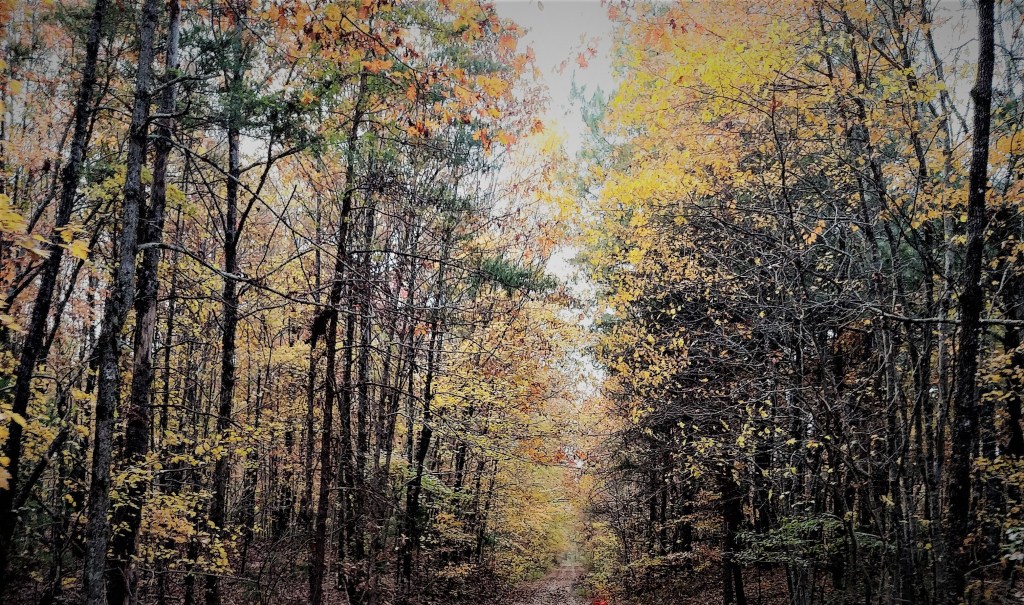
And the other day, I was biking down a trail through the forest near my home. The leaves were glorious; the temperature was perfect; the demons were feeling a lot less powerful than they had for a long time. And for a moment that lasted only a breath’s length, I saw that one day, I would be able to forgive. For that one moment, I knew it would happen. And there was such relief in the knowledge. And I gave thanks to God.

 The Thankful Priest - Leyla King
Leave a comment