A note to my readers:
Some time ago, I published a blogpost in which I referred to myself as “sort of” White. I got an inordinate amount of feedback, both positive and negative, some just curious, some weirdly aggressive, about my use of “sort of” in that context. In an attempt to unpack that phrase, in what I expect will be a good number of blogposts, including this one, over the months (years?) ahead, I am sharing my experiences of being “White-ish.”
“Important note for biracial, multiracial, and People of Color who hold white privilege: This work is for you too. However, your experience of doing this work will be very different from the experiences of white people who are not biracial, multiracial, or People of Color. While you receive the benefits of white privilege from being lighter skinned or white passing, that does not mean you have had the same experiences as a white person. You might have white parent(s) or other ancestors. Or perhaps you are not white at all but are instead a Person of Color who is lighter skinned, white passing, or white adjacent. Your white privilege does not erase or minimize your other identities or experiences.”
– from Me and White Supremacy, by Layla Saad
I remember with searing clarity the first time I learned my own identity.
I must have been 14 or 15 years old. I was a freshman in high school and one day in our Social Studies class, we finished up a unit about World War II and the Holocaust with a screening of some film about Anne Frank. One of the last scenes in the movie was of Anne Frank’s father, having survived the concentration camp and returned to his home, standing in front of a store-front window with a number of televisions all tuned to a news station. The news headline being broadcast is of the creation of the nation-state of Israel and the implication (as I understood it at the time) was that, in this event, there was some offer of hope or redemption from the horrors that Mr. Frank had suffered.
After school, I met my older sister on the bench outside the band hall where we always waited for my mom to pick us up. The film I had watched earlier in the day must have made an impression because I started telling Zeyna about it as we sat side-by-side:
“In the end, though, the Jews got their own homeland!” I told her excitedly. “Isn’t that great?”
Zeyna turned to me with wide eyes and raised her pointer finger at me in the mode of instruction. She spoke slowly and seriously: “Don’t you dare say that to Mom when she gets here.”
I honestly don’t remember what happened after that moment. I imagine that Zeyna must have told me something like, Um, hello??? WE ARE PALESTINIAN! I think she had to have given me the briefest of history and identity lessons in the few minutes before Mom’s Buick arrived. But beyond that moment of horror on Zeyna’s face, I have no memory.
Thinking back, I don’t remember hearing – much less using – the words “Palestine” or “Palestinian” in my childhood at all. We rarely talked about “Arabs” even. “Arabic” was definitely part of my lingo and I knew that was what my mom and her family spoke. And I was especially close (both emotionally and geographically) to my maternal grandparents and the large and loving web of great-aunts and uncles and cousins that I grew up around throughout my childhood, the extended family that helped to raise me.
But I didn’t know that this family made me different from my peers in any way. I just assumed that everyone had a mom who spoke a second language. I thought everyone saw dozens of cousins and extended family members for a couple of hours on a weekly basis every Sunday after church. It never occurred to me that other people didn’t celebrate holidays with about a hundred relatives.
The first time I ever questioned those assumptions was one Sunday maybe a year or so after the after-school incident with my sister. Zeyna had invited a friend of hers – I think her name was Mary maybe? – to church with us that day. And since our extended-family gathering for “coffee” at one of my great-aunts’ houses afterwards was a foregone conclusion, Mary came with us to that, too.
About an hour into it all, we found Mary sitting apart from the rest of us, weeping. If you want to get the attention of a bunch of Arab mothers, sit by yourself and cry. All the aunties came running: “What’s wrong? Habibti, are you ok? What’s the matter?”
When she could find a space to answer, poor Mary wailed: “I didn’t know families could be like this!” she cried. “My family doesn’t even get together like this on Thanksgiving! I wish I had a family like yours!”
***

I am white, with a lower-case “w.” By that I mean that my skin-color is what we term “white.” I’ve got fair skin and hazel-green eyes (like my grandmother’s) and light brown hair. My dad used to say I have the map of Ireland stamped on my face (my ethnicity on my father’s side being Irish and Croatian). But only when you look casually, I think. Look a little further, at my deep-set eyes, at the bones of my face, at the fullness of my calves and thighs, and you’ll see that I am Palestinian.
Still, the world doesn’t look so closely. The world glances at the most superficial aspects of our appearances and makes all sorts of assumptions. So, growing up – and still to this day – the world experiences me as White, with a capital “W.” Which means, of course, that I experience the world as a White person.
So, while my sister, with her light brown skin that turned almost black in that Texas summer sun, must have grown up experiencing herself as somehow “different,” as de-centered, as non-white,[i] I always only experienced the world with the privilege that whiteness brings. Which must be why Zeyna knew she was Palestinian well before I did. Which is why she was in a position to enlighten and educate me all those years ago. Which is why she maybe has never had to work out her own identity as I have done over the years.
Recently, I read Layla Saad’s Me and White Supremacy with a small group of White women. Only about half way through the book, as I heard the stories of the other women’s experiences with it, which felt strikingly and weirdly different from mine, did I realize that Saad’s “important note” to “biracial, multiracial and People of Color” near the beginning of the text was actually meant for me. I am biracial. I am one-half Palestinian, one-quarter Irish and one-quarter Croatian. I am a Person of Color and I am White. It has taken me a very long time to realize that. I am still on that journey.
***
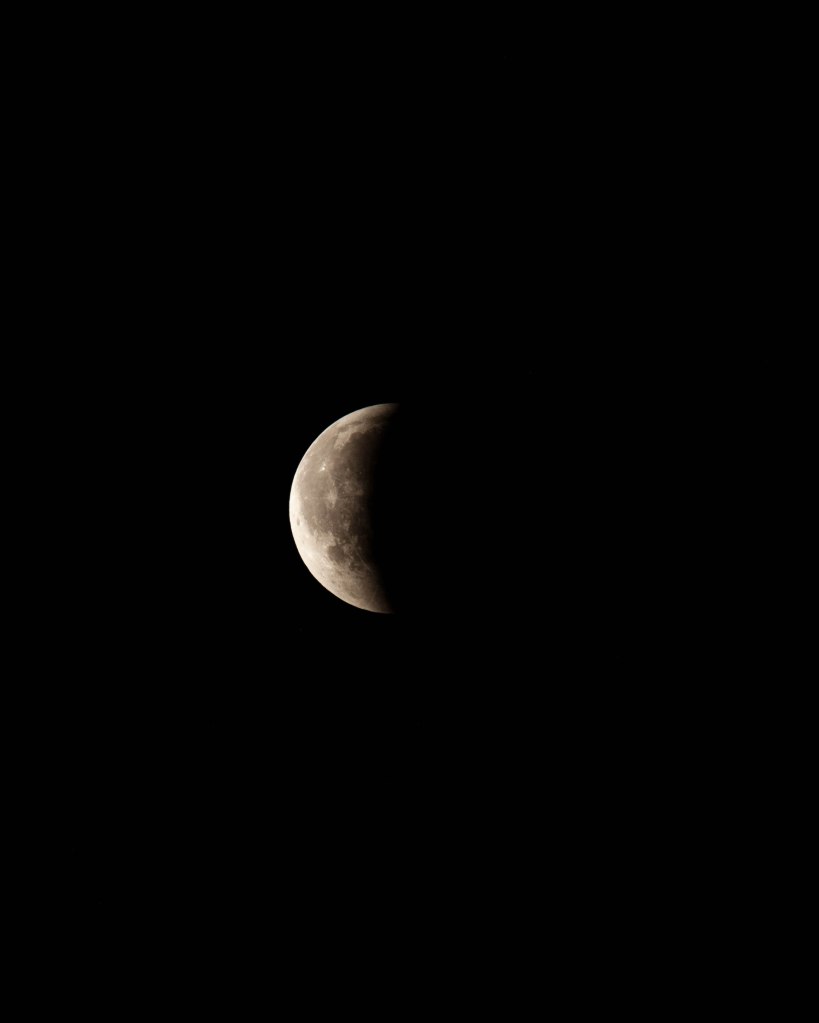
Leyla. It is my name. It is the word that contains my identity. In Arabic, spelled slightly differently from the name, the word means, plainly, “night.” Turned into a name, it gains meaning both in the identity it attains and in layers of poetic imagery it accrues: it is a very fine wine, the poet’s idealized woman, the beauty of a dark, dark night. It is ironically fitting that I, the lightest member of my family, have been named after the dark, beautiful night. I thank my lucky stars.
الحمد لله Praise be to God.
[i] I’ve never actually had this discussion with my sister, though I know about a small handful of experiences she has had with others’ racism in ways I have never had to confront.

 The Thankful Priest - Leyla King
Leave a comment