These times, y’all. This moment in history in our country, in our communities. It is something else.
And, I am deeply aware of the holes in my experiences and my knowledge. So, I feel like I should begin this post with a disclaimer that I’m sure there are ways in which what I’m about to say is wrong. But maybe there are parts of it that are right, too. And I certainly welcome any and all respectful comments and conversation on the topic.
As a sort-of white American (the reason for the “sort-of” will have to be addressed in a whole different post), my Facebook feed right now is filled with other (not-sort-of) white folks calling on their fellow white Americans to be good “allies” to Black Americans. And I get the intention of that term. But I am struggling with it.
For one, none of my friends of color (so far as I’m aware) has asked this of me; for whatever reason, the request/demand always seems to come from white friends, so that makes me a little skeptical to start out with, though I grant that there may just be some voices of POC I’m not hearing here. Still, my discomfort goes deeper than that. And it’s not the first time I’ve felt it. Whenever the same term, “ally,” has been used in the struggle for equality for LGBTQ+ folks, I’ve had the same sort of visceral reaction. Campus groups, for example, are always labeled that way: “LGBTQ+ and allies.” And, at the height of the #MeToo movement, we heard a lot of the same language, how men should be good, strong, attentive, listening (you can have your pick of adjectives) allies to and for women.
In all of these cases (and I’m sure there are others), the term just doesn’t sit well with me and I think I’m able, finally, to articulate two reasons why:
1) The alliance implied always seems to go one way only. Straight people are supposed to be allies for LGBTQ+ folks. White people must be allies to Black people. Men must be allies to women. You rarely hear the groups equalized. Personally, I have never heard in the common parlance something along the lines of “women and men must be allied together in the fight against sexism across the globe” or “Black folks are allies with white folks in the fight against the racism embedded in our nation’s systems.” And I think that does a disservice to the very people to whom we are meant to be allies because it implies that the fight is theirs, and theirs first, before it is also ours.
This term, as it is used in the current discussion about social injustice in our country, is not used for all people who are engaged in the fight for justice. LGBTQ+ folks and their allies. Women and their male allies. Black people and their white allies. It seems to me that it ends up implying that the folks named first are the ones doing the fighting and the “allies” are there in some sort of supportive role. Maybe that’s just my jaded perspective of it, but that’s how the term makes me feel when it’s used in these contexts. And that doesn’t seem right to me. This is not “their” fight in which I am called to play a supporting role. This is my fight, too. This is our fight together, no matter your or my skin color, gender or sexual orientation.
Which brings me to my second point of discomfort:
2) What I dislike about the use of the “allies” term is that it continues to separate folks who, in my mind, should be united. Now, that’s not to say we should “whitewash” everyone or that we should be somehow colorblind or genderblind – as if that is actually possible! On the contrary, I love difference. I wish we could highlight our differences more often. I love discovering the unexpected in people I always assumed were just like me. I delight in hearing the stories and perspectives of others that are so different from my own. I am constantly amazed at the way these things open me up and lead me into new insights and learnings I would have never known.
And I get, too, that part of using the term in this way is to make sure that the folks who are usually marginalized get center-stage for once, top-billing, so to speak. And I do think that’s important. I just wish we could find another way to highlight those voices without simultaneously demarcating one group as “other.”
Because, when it comes to the fight against injustice, our common humanity must ultimately outstrip our individual differences, right? And it always seems to me that the term “allies” enforces the opposite idea. Like, among the folks fighting racism, for example, there are people of color and there are white people and you must stake your claim in either one group or the other if you want to join the fight at all. (Granted, the race one is especially difficult for me as a self-identified “sort-of” white person, but I imagine there are folks in the gray areas of other dichotomies, too).
Plus, these dichotomies (“LGBTQ+ & their straight allies,” “People of Color & their white allies,” “Women and their male allies”) deny some of the other commonalities that reach across these rigid differences. A white woman has certain things in common with a woman of color that a man (of any color) just doesn’t get in the same way. A lesbian has faced certain experiences in her life that a gay man might be much better able to sympathize with than a straight woman. And we can’t separate those experiences. It’s not like I can say, “right now, I’m focused on racism, so I’m going to forget all my experiences as a woman and just focus on my experiences as a white person.” Life just isn’t so cut-and-dry, so black-and-white (pun intended).
Ultimately, it seems to me that the use of “allies” in these contexts sorts us all into categories of “us” and “them,” which, ironically, is exactly the kind of thinking these battles are waged against.
Look, the first thing that pops into my head when you talk about allies is the second world war. Then, there was a group of various nations allied to fight the Nazis and fascism. Together, the group of nation-states were the “Allies.” It wasn’t like France was fighting the Nazis and the other countries were its allies. Or that only the UK knew how to defeat the Axis powers and all the other countries had nothing else to add but man-power. Rather, from the beginning, France, Poland and the UK were allies all together and when other countries joined in, they joined the group of allies and became, also, a part of the whole – an ally.
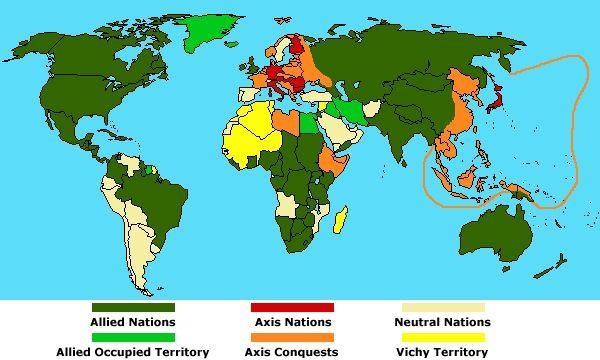
at this site
And, in this moment, we ought to all be allies together in these struggles, right? Surely, we should be allied groups of black and white folks, men and women, queer and straight folks together. In my mind, it’s the only way we have a hope of winning.

 The Thankful Priest - Leyla King
Leave a comment