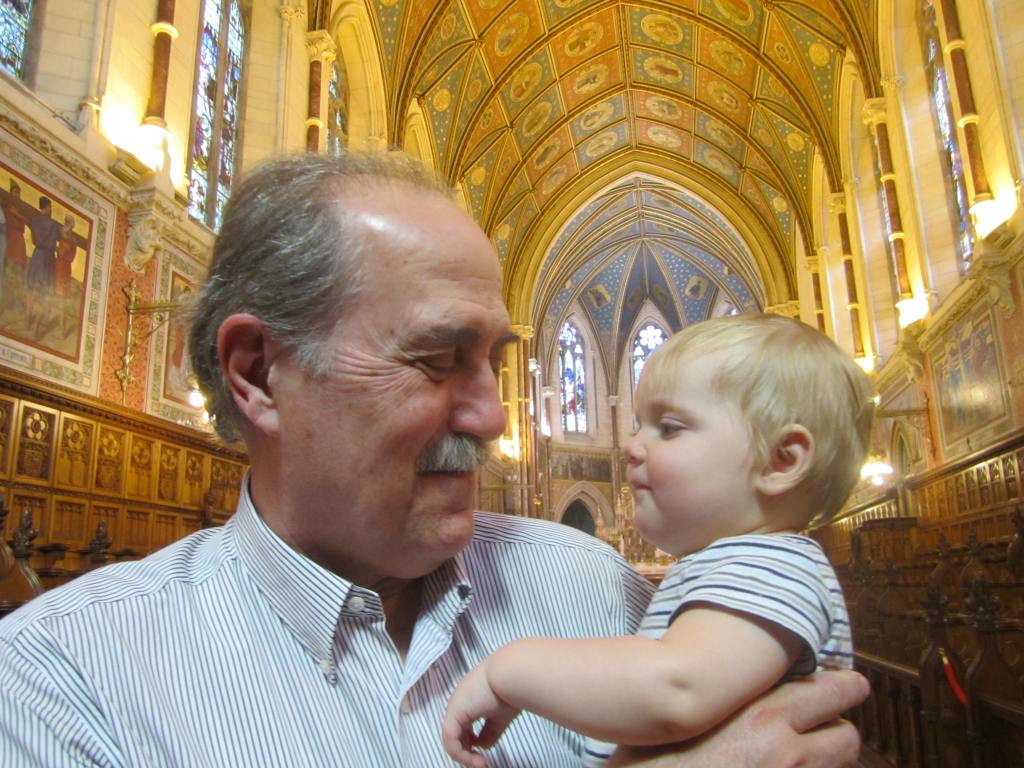
Four years ago today, my father died.
Two years ago today, in the ninth month of my pregnancy with my last baby, Toby, I wrote this on my Facebook feed (thanks, FB, for the “Memories” feature):
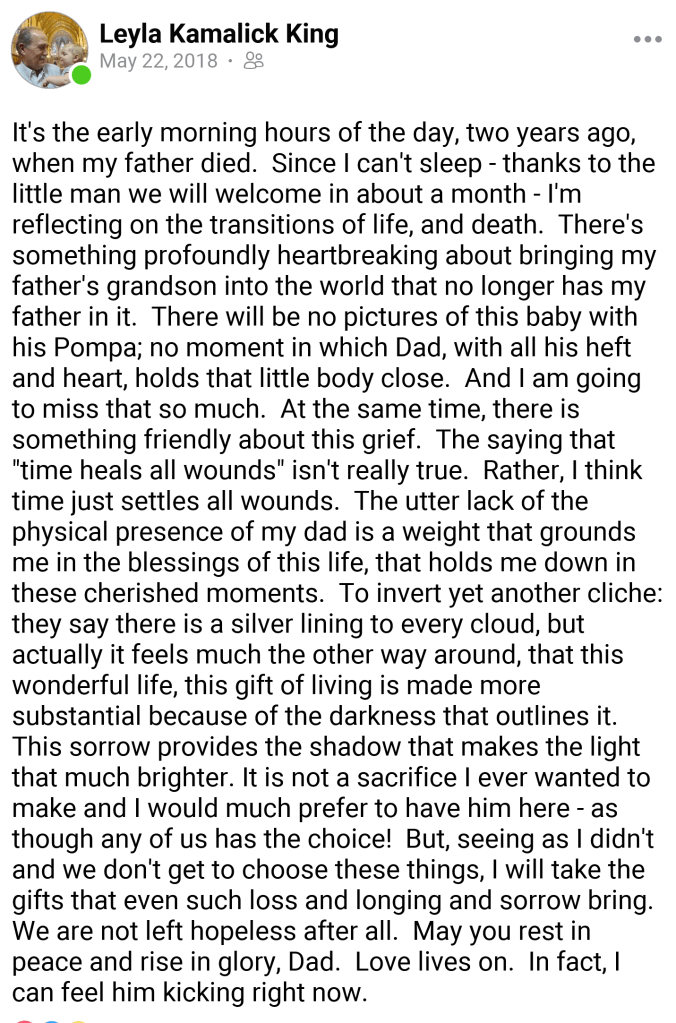
This morning, as I reread this post, I could have kissed my earlier-self. I felt deep gratitude for her wisdom and her words, her ability to name things just right.
And, now, as I struggle with a newer grief even as I can never let go of older ones, as I continue to explore the entirely new emotional landscape that is my anger, as I navigate the stress and anxiety and exhaustion of living in these pandemic times, I marvel at my own capacity – which is not extraordinary, but the gift of being human – to hold together in my body such starkly contrasting passions: grief – old and new – anger, fear, and also joy, a sense of abiding love – my own, others’, God’s – tenacious hope, deep and profound gratitude for the privileges of my life, my vocation, my uncompromisingly caring communities.
And it is with intention that I say that I hold these things simultaneously in my body because they are physical sensations, not just emotional ones. Or, perhaps it is better to say that these human passions are always physical. Our capacity to feel them, to carry them is built into our DNA, as surely as the color of our eyes or the functions of our organs. To feel these things, to hold these things, to experience these things is what it means to be human, generally speaking, and what it means to be me, to be you, in all our specificity.
I carry the grief of my miscarriage, of my father’s death, of the various losses of my life; I carry the anger at the people and the systems that have so deeply hurt me and others; I carry my fierce love for my spouse and my children; I carry my gratitude for the congregation that values and supports me in my vocation; I carry all these things as surely as I did Toby’s forming body within my own for those 40 weeks two years ago. And like that child, these passions live and move; they often kick out, demanding that we acknowledge their presence; they burden us, even as they ground us, with their weight; they settle into our very being until we wake up one day and are astonished by the knowledge that they make up our whole, that we and they are one and the same. We wake up and discover that this depth of emotion, this passion, has grown into who we are and, through the miraculous working of God, we have labored to create our selves.
It is said that life is a miracle. And anyone who has gone through a failed pregnancy knows just how true that is, how the fact that any of us make it through those precious weeks in utero and out the other side is a testament to the fragility and the power of life.
But it doesn’t end in physical birth, does it? The miracle of life is that we continue to be born and reborn, again and again, over and over. Perhaps Jesus hinted at this capacity when he talked about being born of the Spirit. That we make it, through each phase and stage of our emotional growth and development (though, admittedly, some make it through these phases with a little more grace than the rest of us) is its own testament to the capacity of the human soul to truly live. And, I think, I trust, I hope, it is testament, too, to the truth that there is within each of us something that must be born again, even at our death, something that is simply too real to disappear into dust or fade away into the ash.
And, if that is the case, then all those things my father carried here on earth, all those human passions that made him him have not been lost, but are just held no longer in his earthly body but in the heart of God.

 The Thankful Priest - Leyla King
Leave a comment